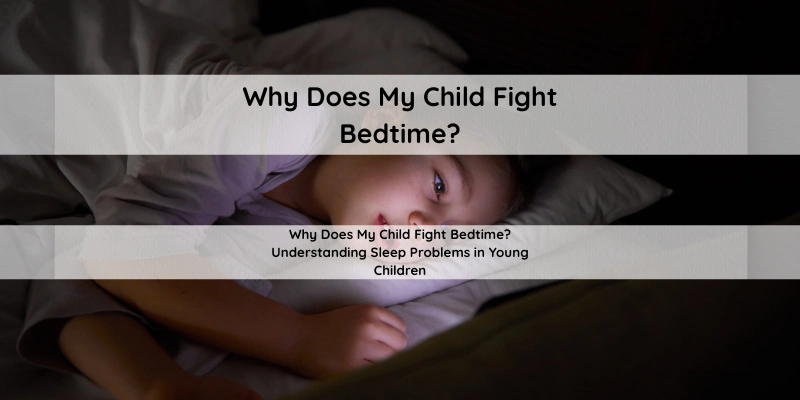
Bedtime battles are one of the most common challenges parents face, and many caregivers find themselves wondering, “Why does my child fight bedtime?” A tired child who won’t settle can feel confusing, frustrating and never-ending — but sleep resistance almost always has an understandable cause. When you understand why children fight bedtime, it becomes much easier to support calmer evenings and better sleep for the whole family.
1. The Overtired–Overwired Cycle
When children become overtired, their bodies release extra cortisol and adrenaline — the same stress chemicals used during “fight or flight.”
Ironically, this makes it harder for them to fall asleep.
Common signs include:
- hyperactivity at bedtime
- giggles that escalate
- wild or silly behaviour
- sudden irritability
This isn’t defiance — it’s biology.
2. A Child’s Brain Has Difficulty “Shutting Down”
Young children have immature executive function. Their brain struggles to:
- transition from play to rest
- switch off stimulating activities
- regulate emotions
- recognise internal tired cues
Routines and gentle wind-down time help guide the nervous system toward calm.
3. Bedtime Anxiety or Separation Worries
Many children experience nighttime fears or separation anxiety, especially during developmental leaps.
Common fears include:
- being alone
- dark rooms
- monsters or shadows
- missing a parent
These worries activate the amygdala (the brain’s alarm centre), making settling difficult.
4. Sensory Needs and the Sleep Environment
Some children become overstimulated by:
- bright lights
- noise
- screens
- scratchy pyjamas
- too much activity before bed
Others may seek movement or pressure (jumping, rolling, climbing) because their sensory system needs input to feel grounded.
5. Inconsistent Routines or Irregular Sleep Windows
Children thrive on predictable patterns — their body clock depends on it.
Late naps, missed naps, or inconsistent timing can all disrupt the sleep cycle.
6. What Helps? Evidence-Based Strategies
- Keep a consistent bedtime routine
- Dim lights and lower stimulation 30–60 minutes before bed
- Use predictable steps (bath → pyjamas → story → bed)
- Offer comfort if your child is anxious
- Avoid screens for 1–2 hours before bed
- Use calm voice, slow movements, gentle connection
Children don’t outgrow bedtime struggles by force — they outgrow them through support, predictability and a regulated nervous system.
Closing Thought
Sleep challenges are extremely common, but they rarely mean something is “wrong.” When parents understand the biological, emotional and sensory reasons behind bedtime behaviour, evenings become calmer for the whole family.
Child Behaviour Australia is proudly part of Child Care Guide


Leave a Reply