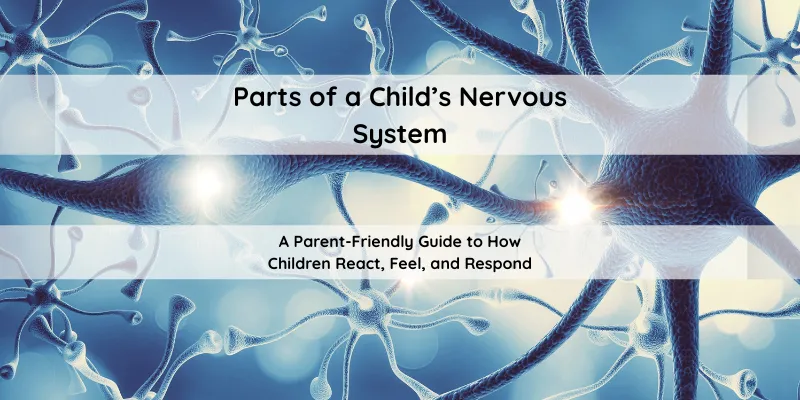
Every behaviour a child shows — from giggles and curiosity to meltdowns, fear, or energy bursts — begins inside the nervous system. When parents understand how a child’s nervous system works, everyday challenges suddenly make much more sense.
This guide explains the key parts of the nervous system in clear, easy-to-understand language, so you can better support your child’s emotions, regulation, and behaviour.
1. The Two Main Systems: Central & Peripheral
Central Nervous System (CNS)
This is the “command centre” made up of the brain and spinal cord.
It processes information, decides what to do, and coordinates the body’s response.
Peripheral Nervous System (PNS)
These are the nerves running throughout the body.
They collect information from the environment (sounds, touch, movement, temperature) and send it up to the brain.
For a child, this means:
- itchy clothes can cause distress
- loud sounds can feel overwhelming
- bright lights or busy rooms can trigger stress
- snuggles, hugs, and soft textures can calm the system
Children rely heavily on these information pathways to understand their world.
2. The Three Key Brain Regions That Shape Behaviour
a) The “Thinking Brain” – The Cortex (especially the Prefrontal Cortex)
This area handles:
- planning
- problem-solving
- emotional control
- understanding consequences
- flexible thinking
It’s the part of the brain adults use when they stay calm under pressure.
But in young children, this part is still under construction.
It won’t fully develop until the mid-20s.
That’s why kids:
- struggle to wait
- find transitions hard
- get overwhelmed easily
- can’t always “think before they act”
They aren’t being defiant — their thinking brain is still developing.
b) The “Feeling Brain” – The Limbic System
This cluster of structures includes the amygdala, often called the brain’s “alarm bell.”
It controls:
- fear
- anxiety
- excitement
- emotional reactions
- fight-or-flight responses
When a child feels overwhelmed, the amygdala can take over quickly (known as an amygdala hijack) and shut down access to the thinking brain.
That’s why reasoning with an upset child doesn’t work until they’ve calmed emotionally.
c) The “Body Brain” – The Brainstem
This area runs beneath conscious awareness and manages:
- heart rate
- breathing
- stress hormones
- sleep–wake cycles
- basic survival responses
Children who are overtired, hungry, overstimulated, or dysregulated often show behaviours linked to brainstem stress (meltdowns, irritability, hyperactivity, clinginess).
3. The Autonomic Nervous System: Calm vs. Alarm
A child’s body constantly shifts between two systems:
Sympathetic Nervous System – “Alarm Mode”
Activated when the child perceives a threat or becomes overwhelmed.
Signs of activation:
- crying
- running away
- yelling
- hitting
- freezing
- fast breathing
Even minor triggers — like the wrong colour cup — can push a child into alarm mode if their nervous system is already taxed.
Parasympathetic Nervous System – “Calm Mode”
This system helps the body rest, digest, and recover.
Calming activities include:
- slow counting
- deep pressure hugs
- quiet play
- slow breathing
- predictable routines
- gentle rocking
- warm baths
- rhythmic movement
When the parasympathetic system activates, the brain regains access to its thinking regions.
4. The Sensory System: How Children Take In the World
Children interpret the world through eight sensory systems, not just the traditional five. These include:
- Touch
- Hearing
- Sight
- Smell
- Taste
- Vestibular (movement & balance)
- Proprioception (body awareness)
- Interoception (internal body signals like hunger or needing the toilet)
If any of these systems become overloaded, the child can quickly move into dysregulation.
Examples:
- loud shops → overwhelm
- scratchy clothes → sensory distress
- bright lights → irritability
- spinning or jumping → sensory seeking
- not recognising hunger → sudden meltdown
Understanding sensory processing is vital when supporting behaviour.
5. How the Nervous System Shapes Behaviour
Children behave according to the state their nervous system is in.
Regulated State → Calm, curious, able to learn
The parasympathetic system is active.
The thinking brain is online.
Dysregulated State → Emotional, overwhelmed, reactive
The sympathetic system is in charge.
The feeling brain takes over.
Overloaded State → Shutdown or meltdown
The brainstem takes control.
The child cannot think, reason, or cooperate until calm.
Behaviour is communication
— it reflects the child’s current nervous system state, not their intentions.
6. How Parents Can Support the Nervous System
Co-regulate first
Your calm presence helps their nervous system settle.
Use predictable routines
Predictability reduces neurological load.
Offer bounded choices
Avoid overwhelming the thinking brain.
Use sensory tools
Movement, pressure, fidgets, or breathing help re-balance the system.
Teach calming strategies when the child is not upset
The brain learns best in a regulated state.
Final Thought
A child’s behaviour is deeply rooted in how their nervous system processes the world.
When parents understand these internal systems, behaviour stops feeling mysterious — and becomes something you can gently guide with empathy, calm, and connection.

Leave a Reply