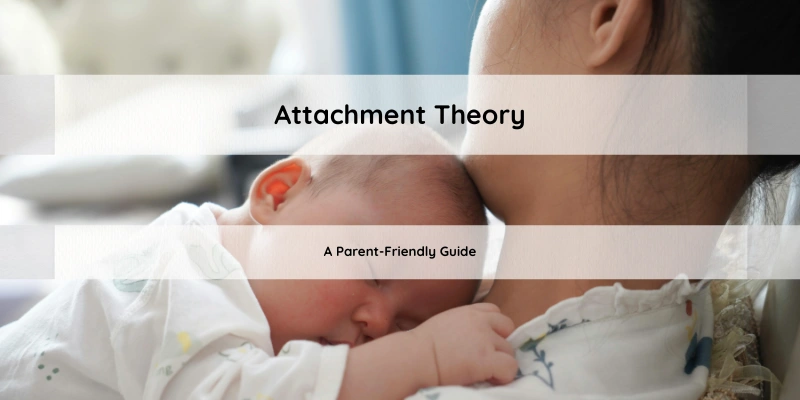
What Is Attachment Theory?
Attachment Theory is one of the most influential ideas in child psychology. At its core, it explains how children form emotional bonds with the people who care for them, and how these early relationships shape the way they learn, explore, cope with stress, and eventually connect with others throughout life. Although it began as an academic concept, attachment theory has become a practical, everyday guide for parents — a framework that helps make sense of why children behave the way they do and what they need to feel safe.
How Attachment Theory Began
Attachment theory emerged through the work of British psychiatrist John Bowlby, who believed that children are biologically driven to stay close to caregivers because proximity supports survival. But while the theory originated in evolutionary thinking, its real power lies in understanding emotional safety. A child depends on their caregiver not only for food and protection but also for comfort, security and reassurance. When a caregiver responds consistently and sensitively, the child begins to see the world as predictable and themselves as worthy of care. This early sense of security becomes the foundation for healthy emotional development.
Mary Ainsworth and the Patterns of Attachment
Psychologist Mary Ainsworth expanded Bowlby’s work by observing how infants reacted to brief separations and reunions with their mothers. Her now-famous “Strange Situation” studies revealed patterns of attachment that reflected different caregiving experiences.
Children who had received responsive, attuned care showed what Ainsworth called secure attachment. These children used their caregiver as a secure base — a stable emotional anchor from which they could explore their surroundings and return for comfort when needed. When they were upset, they sought closeness and were soothed effectively.
Other children displayed forms of insecure attachment, shaped by less predictable caregiving. Some became anxious and clingy, unsure whether comfort would be reliably available. Others appeared emotionally distant or avoidant, suppressing their need for closeness to cope with inconsistent or unresponsive care. In more challenging circumstances, some children showed a disorganised mixture of responses, reflecting confusion or fear in the relationship. These patterns don’t label children as good or bad; they simply reflect how a child has adapted to the emotional environment available to them.
What Attachment Means for Modern Parenting
For parents today, attachment theory offers understanding and reassurance rather than criticism. Children learn about relationships through the ordinary moments of connection — shared smiles, warm tone of voice, comfort after tears, and repair after misunderstandings. A securely attached child is not one who never cries or becomes upset, but one who trusts that comfort will come when needed. These early experiences teach the child that emotions are manageable, relationships are reliable and help is available in times of stress.
Attachment theory also helps explain why separation can be difficult for young children, why they may cling during new experiences, and why they behave differently around different adults. These reactions are not signs of manipulation or weakness; they reflect the natural balance between independence and the need for safety. A secure attachment supports both — children explore more confidently when they know they have a safe base to return to.
Good Enough Parenting and the Power of Repair
One of the most comforting ideas in attachment research is the notion of “good enough” parenting, a term from paediatrician Donald Winnicott. Children do not need perfect parents. They need caregivers who are generally attuned, responsive most of the time, and willing to reconnect after moments of stress or disconnection. Every parent makes mistakes, becomes distracted or misreads their child’s cues. What matters most is the repair — returning to the child, acknowledging their feelings and showing that the relationship is secure.
Attachment patterns can also evolve over time. As relationships strengthen, stress lessens or caregivers become more emotionally available, children often move toward greater security. Attachment theory is ultimately hopeful: it shows that connection grows with practice, presence and care.
Why Attachment Theory Still Matters
Attachment theory highlights something simple yet profound — children thrive when they feel safe, seen and soothed. Whether it’s a cuddle after a scraped knee, a quiet conversation after tears, or a moment of reconnection after a difficult day, these everyday interactions shape how a child learns to trust both themselves and the world.
Child Behaviour Australia is proudly part of Child Care Guide
Leave a Reply